One-Sentence Answer
ILMU uses a dual-track model strategy: NVIDIA's Nemotron-3-Super (fine-tuned for Malaysian context) for agent workloads, plus YTL AI Labs' own flagship ILMU v3.1 model that outperforms GPT-4o on Malay language benchmarks.
The Question: What's Under the Hood?
When Malaysian developers evaluate ILMU Console, they inevitably ask: what LLM is this actually running on?
The answer is more nuanced than "just another GPT wrapper." ILMU uses a hybrid model architecture that combines:
- NVIDIA's Nemotron models (fine-tuned by YTL AI Labs for Malaysian context and agent tasks)
- YTL AI Labs' proprietary models (trained on local data, achieving state-of-the-art performance on Malay benchmarks)
This dual-track approach gives developers both specialized agent capabilities and general-purpose reasoning — all with 100% Malaysian data residency.
Track 1: NVIDIA Nemotron for Agent Workloads
What is Nemotron?
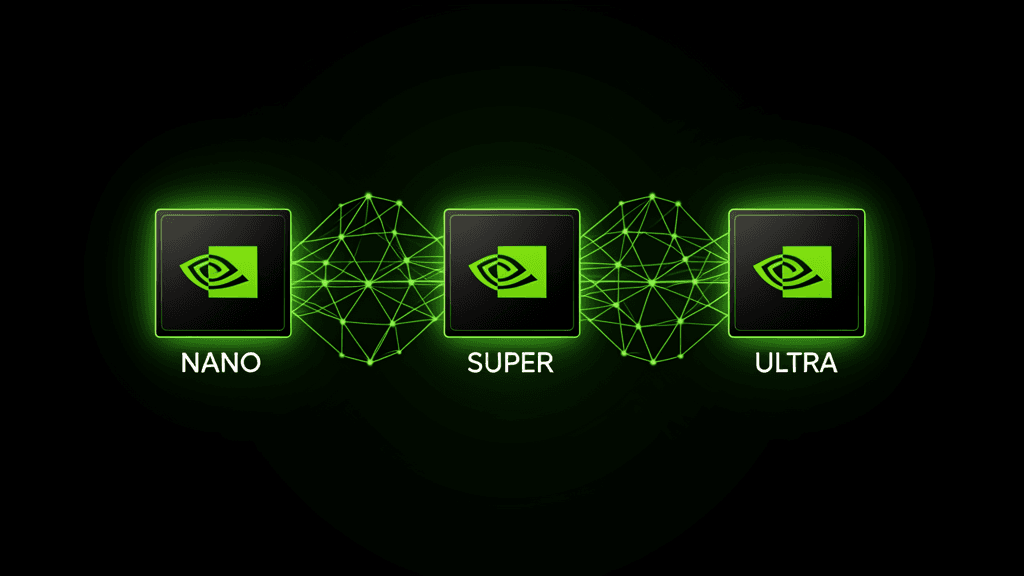
Nemotron is NVIDIA's family of large language models optimized for enterprise AI workloads. ILMU's Claw models are based on Nemotron, specifically:
- Nemo-Super (based on Nemotron-3-Super) — high-performance model for complex agent tasks
- Nemo-Nano (based on ilmu-nemo-nano) — lighter, faster model with deeper Bahasa Malaysia training
Why Nemotron for Agents?
Nemotron-3-Super was designed from the ground up for autonomous agent workloads. Key advantages:
Tool calling and function calling — Nemotron excels at generating structured JSON responses that agent frameworks (LangChain, CrewAI, AutoGen) can parse and execute. This is critical for multi-step workflows where the AI needs to call APIs, query databases, or trigger actions.
Multi-turn reasoning — Agent workloads involve back-and-forth exchanges where the AI maintains context across multiple tool calls. Nemotron's 256K token context window and optimized attention mechanisms handle this without losing track of the conversation.
PinchBench performance — Nemotron-3-Super ranks #1 on PinchBench (85.6% score), the specialized benchmark for agent-based tasks. This measures how well a model can:
- Parse complex instructions
- Generate valid function calls
- Handle tool responses
- Maintain state across multiple steps
For Malaysian developers building autonomous agents, Nemo-Super is the purpose-built choice.
Malaysian Fine-Tuning
YTL AI Labs didn't just deploy vanilla Nemotron. They fine-tuned it for local context:
- Manglish and Bahasa Rojak — understands mixed-language queries like "Can you check the SSM registration for this company?"
- Local business terminology — kopitiam operations, SME supply chains, government procurement
- Cultural nuance — knows that "Georgetown" refers to Penang, not the US city
This fine-tuning happened in collaboration with NVIDIA and Universiti Malaya, ensuring the models understand Malaysian reality while retaining Nemotron's agent capabilities.
Track 2: YTL AI Labs' Flagship Models
ILMU v3.1: Malaysia's Own LLM
Beyond the Nemotron-based Claw models, YTL AI Labs developed their own flagship model: ILMU v3.1.
This is not a wrapper around GPT-4 or Llama. ILMU v3.1 is a proprietary model trained (or heavily fine-tuned) on Malaysian data, achieving remarkable benchmark performance:
Benchmark Performance: ILMU vs GPT-4o
On MalayMMLU (Malay language understanding benchmark developed by YTL AI Labs and Universiti Malaya):
| Model | Language | STEM | Humanities | Social Sciences | Others | Overall | |-------|----------|------|------------|-----------------|--------|---------| | ILMU | 89.36 | 88.05 | 88.40 | 85.44 | 85.08 | 87.20 | | GPT-4o | 87.64 | 83.54 | 87.78 | 82.84 | 82.34 | 84.97 | | Deepseek-V3 | 83.13 | 83.91 | 78.84 | 78.25 | 78.00 | 80.56 | | GPT-5 | 83.59 | 78.10 | 76.50 | 80.73 | 75.44 | 79.53 | | Llama 3.1 | 79.44 | 78.76 | 81.00 | 76.50 | 75.10 | 78.07 |
ILMU outperforms GPT-4o by 2.23 percentage points overall and achieves the highest scores across all categories.
On global benchmarks (Arena Hard Auto, IFEval), ILMU performs on par with GPT-4o, demonstrating that local training didn't come at the cost of general capability.
What Makes ILMU v3.1 Different?
Extended thinking — ILMU v3.1 supports chain-of-thought reasoning, allowing it to work through complex problems step-by-step before generating a final answer.
Multilingual by design — The model handles English, Bahasa Malaysia, and Chinese with native fluency, including code-switching (mixing languages in the same sentence).
200K context window — Sufficient for most document analysis and long-form reasoning tasks.
OpenAI-compatible function calling — Works with existing agent frameworks without SDK changes.
Specialized Models
YTL AI Labs also developed specialized models for specific modalities:
- ilmu-vision-v1.3 — Vision model with OCR capabilities for document analysis
- ilmu-mini-v3.3 — Lightweight model for high-volume, cost-sensitive workloads
- ilmu-embedding-v1 — Text embedding model for RAG pipelines
- ilmu-asr-v4.2 — Speech-to-text optimized for Malaysian accents and code-switching
- ilmu-tts-v2 — Text-to-speech with natural Malaysian pronunciation
These models are available via PAYG (Pay-As-You-Go) pricing, giving developers flexibility beyond the Claw subscription plans.
The Hybrid Strategy: When to Use Which Model
ILMU's dual-track architecture isn't just marketing — it reflects genuine use-case differences:
Use Nemo-Super (Claw Models) When:
- Building autonomous agents with LangChain, CrewAI, or AutoGen
- Complex tool calling workflows requiring multiple function calls
- Multi-step reasoning where the AI needs to maintain state across turns
- Agent-specific tasks like code generation, API orchestration, or autonomous decision-making
Nemo-Super's 256K context window and PinchBench-optimized architecture make it the best choice for agent workloads.
Use ILMU v3.1 (Flagship) When:
- General-purpose reasoning and content generation
- Document analysis requiring deep understanding of Malaysian context
- Multilingual tasks where you need fluent Bahasa Malaysia, English, or Chinese
- Extended thinking for complex problems that benefit from chain-of-thought reasoning
ILMU v3.1's superior MalayMMLU performance and local training make it ideal for Malaysian-specific tasks.
Use ILMU Mini v3.3 When:
- High-volume, cost-sensitive workloads (classification, summarization, simple Q&A)
- Latency-sensitive applications where speed matters more than depth
- Batch processing where you need to process thousands of documents
At RM 0.20/1M input tokens and RM 1.20/1M output tokens, Mini is 20x cheaper than v3.1 for straightforward tasks.
Technical Architecture: How It All Fits Together
┌─────────────────────────────────────────────────────────┐
│                    ILMU API Gateway                      │
│         (OpenAI / Anthropic / Gemini compatible)        │
└─────────────────────────────────────────────────────────┘
                          │
          ┌───────────────┴───────────────┐
          │                               │
    ┌─────▼─────┐                  ┌──────▼──────┐
    │  Claw     │                  │   PAYG      │
    │  Models   │                  │  Models     │
    └─────┬─────┘                  └──────┬──────┘
          │                               │
    ┌─────┴─────┐                  ┌──────┴──────┐
    │ Nemo-Super│                  │ ILMU v3.1   │
    │ Nemo-Nano │                  │ ILMU Vision │
    │ (Nemotron)│                  │ ILMU Mini   │
    └───────────┘                  │ Embeddings  │
                                   │ Speech      │
                                   └─────────────┘
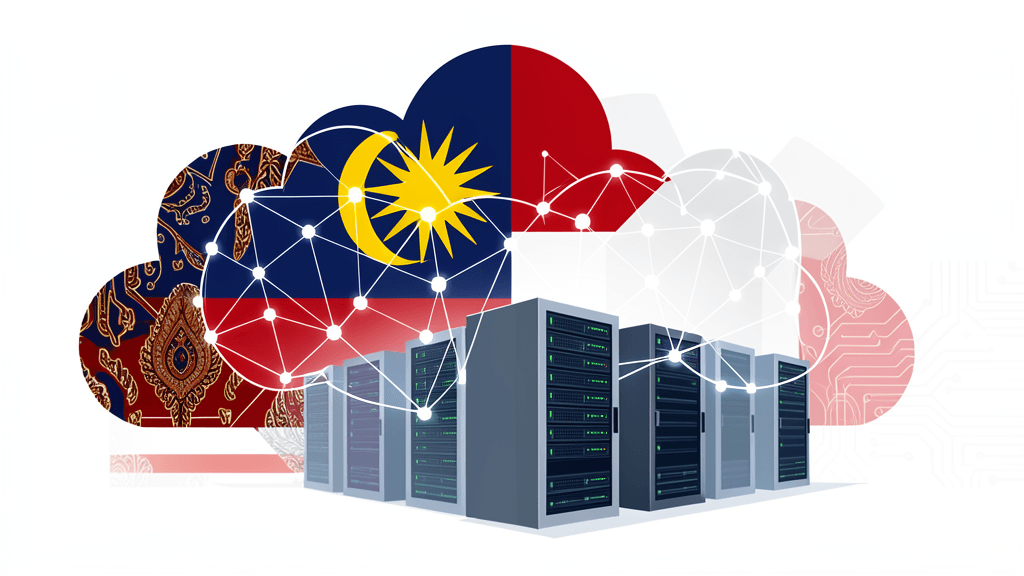
All models run on YTL AI Cloud infrastructure in Malaysia, ensuring:
- 100% data residency
- No data used for training (unless you opt in)
- Consistent low latency from Southeast Asia
Pricing: Model-Specific Rates
Claw Plans (Subscription)
| Plan | Price | Models | Token Allocation | |------|-------|--------|------------------| | Free | RM 0 | Nemo-Super, Nemo-Nano | Limited (200 seats) | | Starter | RM 25/month | Nemo-Super, Nemo-Nano, BGE-M3 | Monthly quota | | Pro | RM 50/month | All Claw models | Monthly quota |
Tokens from Claw plans are deducted from your monthly allocation. No PAYG charges.
PAYG Models (Pay-As-You-Go)
| Model | Input Rate | Output Rate | |-------|------------|-------------| | ILMU v3.1 | RM 4.00/1M tokens | RM 16.00/1M tokens | | ILMU Vision v1.3 | RM 1.60/1M tokens | RM 4.80/1M tokens | | ILMU Mini v3.3 | RM 0.20/1M tokens | RM 1.20/1M tokens | | BGE-M3 (embeddings) | RM 0.04/1M tokens | — | | ILMU ASR v4.2 (speech-to-text) | RM 0.0002/sec | — | | ILMU TTS v2 (text-to-speech) | RM 0.08/1K chars | — |
PAYG credit is shared across your organization and valid for 12 months.
Comparison: ILMU vs Other Sovereign AI Platforms
| Platform | Base Model | Local Fine-Tuning | Agent Optimization | Data Residency | |----------|------------|-------------------|-------------------|----------------| | ILMU | Nemotron-3-Super + proprietary ILMU v3.1 | Yes (Malaysian context) | Yes (85.6% PinchBench) | 100% Malaysia | | SEALION (Singapore) | Llama-based | Yes (Southeast Asian) | Limited | Singapore | | SahabatAI (Malaysia) | Unknown | Yes (Malay) | Limited | Malaysia | | Mallam (Malaysia) | Smaller models | Yes (Malay) | Limited | Malaysia |
ILMU's hybrid approach (NVIDIA partnership + proprietary models) gives it both agent capabilities and local language superiority that pure fine-tuning approaches can't match.
Conclusion
ILMU isn't "just another GPT wrapper." It's a sophisticated hybrid architecture that combines:
- NVIDIA's Nemotron-3-Super — the best-in-class model for agent workloads, fine-tuned by YTL AI Labs for Malaysian context
- YTL AI Labs' proprietary ILMU v3.1 — a flagship model that outperforms GPT-4o on Malay language benchmarks
This dual-track strategy gives Malaysian developers the best of both worlds: specialized agent capabilities for autonomous workflows, plus general-purpose reasoning with superior local language understanding.
For developers building AI agents, Nemo-Super's 85.6% PinchBench score means reliable tool calling and multi-step reasoning. For businesses needing Malaysian context, ILMU v3.1's 87.20% MalayMMLU score means accurate understanding of local language and culture.
The question isn't whether ILMU is "based on" a Western model. The question is whether your AI platform understands Malaysian reality — and ILMU's benchmark performance proves it does.
Extended Reading
- ILMU Console platform guide — complete overview of ILMU's features and pricing
- YTL AI Labs official website — the team behind ILMU
- ILMU API documentation — technical details of all available models
- MalayMMLU benchmark — the benchmark where ILMU outperforms GPT-4o